

The holidays can feel bittersweet when someone you love lives in memory care. The traditions you remember may not be the ones you can share now, and it is natural to feel love, grief, and hope all at once. The good news is that meaningful moments are still possible, and they are often smaller and quieter than the celebrations of the past.
Families with a loved one in one of the memory care facilities in Chicago often ask how to make holiday visits comforting instead of overwhelming, and a few thoughtful choices can make a real difference. Knowing what memory care communities offer helps you plan a season that feels warm and manageable.

Start With Realistic Expectations
Holidays will look different this year, and that is not a failure. The goal is connection, not a perfect celebration. It helps to remember that dementia affects behavior and personality, not just memory, so your loved one’s mood and energy may shift from one visit to the next.
A good visit might be fifteen minutes of a favorite song and a gentle hand to hold, and that can be every bit as meaningful as a long gathering.
Keep your loved one’s comfort ahead of tradition. If a familiar routine feels soothing, protect it, and if something festive now seems confusing, it is okay to let it go. Families who have already made the transition may find the post on preparing a loved one for the move to memory care a helpful companion.
Plan the Visit Around Your Loved One
A little planning goes a long way. The National Institute on Aging offers guidance on adapting activities for people living with Alzheimer’s disease, including during the holidays, and many of its suggestions translate well to a visit in a care community:
- Plan visits for the time of day your loved one tends to be at their best
- Keep visits short, and be ready to leave early if needed
- Limit the number of visitors at one time
- Create a quiet space with favorite activities or calming music
- Keep routines as familiar as possible
- Ask staff about holiday schedules and visiting guidelines
- Consider a video or phone call as an additional way to connect
That last point matters for relatives who live far away, since a short, warm call brings comfort without the stimulation of a crowd.
Traditions That Still Work
Many of the most meaningful holiday traditions can be adapted for a quieter setting, and the simplest ideas are often the most successful.
Simple Activities to Share
Consider bringing one or two of the following, rather than a full agenda:
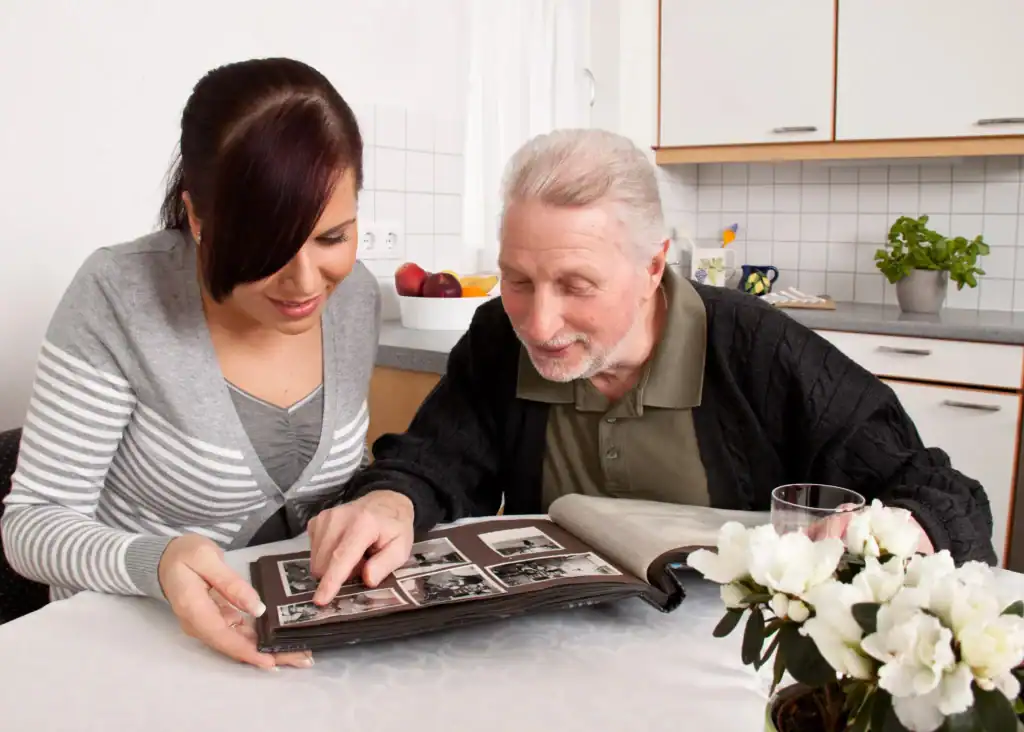
- Looking through photo albums together
- Playing familiar holiday music, or singing along
- Reading a favorite holiday story aloud
- Sharing a favorite treat, after checking with staff about dietary needs
- Offering simple, comforting gifts, such as warm socks or a soft scarf
- A gentle hand massage or a cozy blanket
If you want to bring a small decoration, choose something low-clutter and familiar, and check with staff first. Electric candles are a safer choice than flames. The aim is to bring a feeling of the season, not to rearrange a familiar room.
Prepare Family and Friends
Relatives who have not visited in a while may be surprised by changes in your loved one. A short conversation beforehand can spare everyone discomfort. The National Institute on Aging suggests helping friends and family understand the disease before they visit, and reminding them that Alzheimer’s affects behavior and personality, not just memory.
A few communication tips are worth sharing with visitors:
- Speak calmly, and introduce yourself with a smile
- Avoid quizzing, such as “Do you remember me?”
- Join your loved one’s reality instead of correcting it
- Keep conversation simple, and allow plenty of time to respond
Children can visit too, when they are prepared and the visit is brief. A simple activity, such as coloring or sharing a song, gives them something to do and gives your loved one something to enjoy.
If relatives need background on how memory care differs from other kinds of support, the explanation of memory care and dementia care in Chicago can help them understand what a loved one is experiencing.

When Your Loved One Doesn’t Recognize You
For many families, this is the hardest part of the season. When a parent or spouse does not recall your name, it can hurt deeply, and it is not a reflection of your relationship or of how much you mattered.
Try to focus on the feeling, not the facts. A warm tone, a gentle touch, and a calm presence often leave a lasting impression, even when names slip away. Bring something to do together, and let the visit be as long or short as your loved one needs. Afterward, give yourself permission to grieve and to take a break when you need one.
You do not have to carry those feelings alone. The Alzheimer’s Association offers a free, confidential 24/7 Helpline at 800-272-3900, available around the clock, every day of the year, including holidays. If the emotional weight of caregiving is building, the article on recognizing and overcoming caregiver burnout offers practical support.
Working With the Care Team
The staff at a memory care community see your loved one every day, so they are an invaluable partner. Ask what times of day are calmest, which activities your loved one enjoys, and how the community marks the holidays. If you can, share a short life story, favorite songs, and the traditions that mattered most, so staff can echo them throughout the season.
For families who are still choosing a community, asking how a community handles holidays and family involvement is a good way to understand its culture. The overview of what families should know before choosing memory care offers questions to bring on a tour, and a local senior advisor can help you compare communities and join you on visits.
Taking Care of Yourself
Guilt is common among families of people in memory care, especially at the holidays. Visits do not have to be long to be meaningful, and you are not responsible for making the season perfect. Share visiting among family members, say no to extra obligations, and consider a caregiver support group.
It is also worth remembering that the community’s team is there to support your family, too. If you are exploring options for a loved one in the Chicago area, the page for assisted living in Illinois shows the communities and suburbs where local advisors help families every day.
Frequently Asked Questions
How long should a holiday visit be?
Often short, such as 15 to 30 minutes, depending on your loved one’s energy. You can always return for another brief visit.
Should I take my loved one out of the community for the holiday?
It depends on their safety and stress level. Talk with the staff, who know your loved one’s patterns, and consider a short outing in a familiar place before planning anything longer.
What gifts are appropriate?
Simple, comforting items work best, such as soft clothing, photographs, or a playlist of favorite songs. Check with staff before bringing food or anything that could pose a safety risk.
What if my loved one becomes agitated?
Stay calm, lower your voice, and shift to a quiet activity such as music or photos. If it continues, ask a staff member for help and end the visit gently.
Can children visit?
Yes, when they are prepared and the visit is brief. A simple activity and a quick explanation beforehand make the experience easier for everyone.
Thinking About Memory Care Facilities in Chicago? Let Us Walk With Your Family
At Senior Living Experts, we would be honored to listen to your family’s story, answer your questions, and help you find a memory care community that feels like home. There is no cost and no pressure. Contact us or call 773-231-7212, or email hello@SeniorLivingExperts.com, and let’s talk about what your loved one needs this season.